
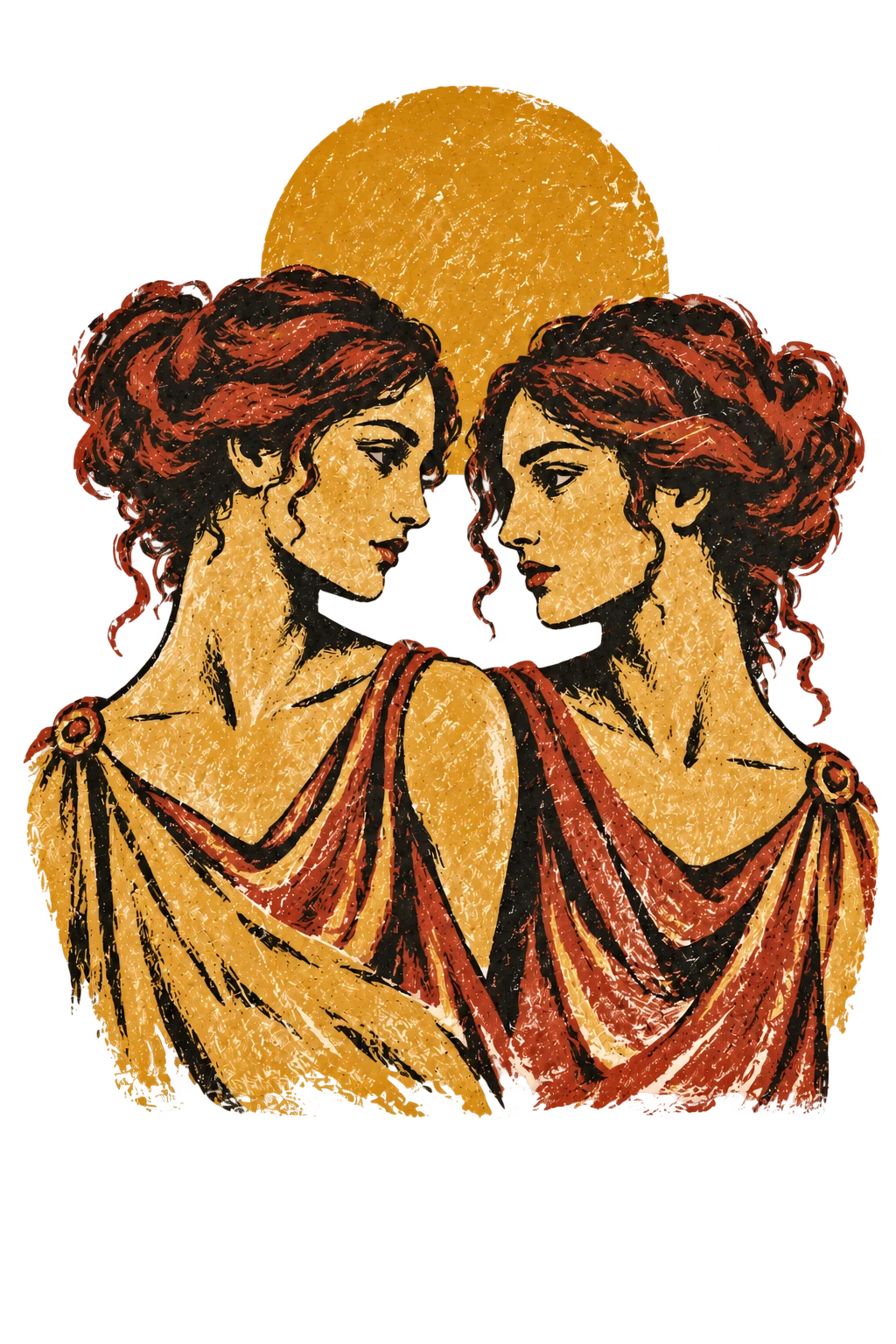
What dates are Gemini?
Gemini dates are approximately May 21–June 20. Its element is air, its modality is mutable and its ruler is Mercury. These dates are a starting point for finding your Sun sign. On a changeover day, you also need your birth year, time and place.
What zodiac sign are June 3 and June 18?
June 3 and June 18 fall under Gemini in Western astrology. Gemini dates are approximately May 21–June 20. The changeover varies with the year and time zone. If your birthday is near a sign boundary, calculate your chart with your birth time and place.
What sign is 6/3?
In month/day format, 6/3 means June 3, which is Gemini. In day/month format, it means March 6, which is Pisces. Check the month name when entering your birth date.
Its place in the zodiac
Gemini is sign number 3 in the order of the zodiac. Its element is air, its modality is mutable and its ruling planet is Mercury. The path the Sun traces across the sky over a year is divided into twelve equal slices; Gemini is the slice from 60° to 90°. Astrology ties the signs to the seasons, so a sign does not sit in the same place in today's sky as the constellation it is named after. Sign dates can shift by a day from one year to the next; if you were born on a day when the Sun changes signs, it is best to have your Sun sign calculated using your birth time.
The heart of this sign
Gemini describes a curious, lively mind. You enjoy seeing a subject from several angles, asking questions, comparing ideas and sharing what you learn. Breaking a complicated matter into smaller pieces comes naturally to this sign. Being able to hold two different viewpoints at once is flexibility, not indecision, as long as you also know how to make a choice at some point.
As your Sun, Moon and rising sign
If your Sun is in Gemini, you feel this energy most when you express yourself and give your life direction. If your Moon is in Gemini, you find relief by talking about what you have been through, writing it down or giving it a name. If your rising sign is Gemini, you get to know people by asking questions, watching what goes on around you and striking up short conversations. Even when all three fall in the same sign, they speak of different things: the Sun describes your core and the Moon your feelings, while the rising sign shows how people see you at first glance. When you read a sign description, first make sure you know which point in the chart it refers to.
Needs and boundaries in relationships
In a relationship, being able to sit with what you have heard for a while matters as much as being able to talk. When someone describes a feeling, don't jump in with a new idea; first say in your own words what you understood. Your curiosity is valuable, but not every topic needs to be discussed at every moment. Sometimes leaving a subject alone is part of good communication too.
An everyday experiment
Imagine you have looked at five different sources for one decision. Write down which question each source answers and set aside the ones that just repeat each other. Then find the one piece of information the decision is truly missing. It is fine to change your mind; you only need to be able to say what convinced you.
Read it alongside the whole chart
A sign takes on meaning within the chart as a whole. If you have a planet in this sign, also look at which house it is in, how it connects with other planets and where the sign's ruling planet sits. The sign describes how an energy works. The house shows the area of life where you live out that energy, and the aspects show which of your wishes affect one another. Your sign does not decide your career or how your relationships turn out; it offers a starting point for getting to know yourself. What did you learn this week that actually changed something you do? Can you tell the difference between what is interesting and what is useful to you? Note the descriptions that don't fit you, too. Seeing what feels foreign to you is as valuable as seeing what feels familiar.
Sources and approach
These sources provide background on the traditional concepts or calculations on this page. Starmora’s original examples and reflection questions are not predictions drawn from these sources.