
Read each card on its own first
Before tying two cards to a single outcome, write down each card's meaning and position. The Magician may call you to act, while the Hermit may suggest stepping back to think. Together they might raise the question “What do I need to know before I act?” A card pair doesn't guarantee a particular event; it gives you a question to think about.
Agreement, tension and sequence
Cards with similar meanings can bring a subject into sharper focus, while contrasting cards can make room for two needs at once. In a three-card spread, the order gives each card its own role; for example, one may show a habit carried over from the past and another a choice you have today. The same three cards can say something quite different in answer to another question.
Notice recurring suits
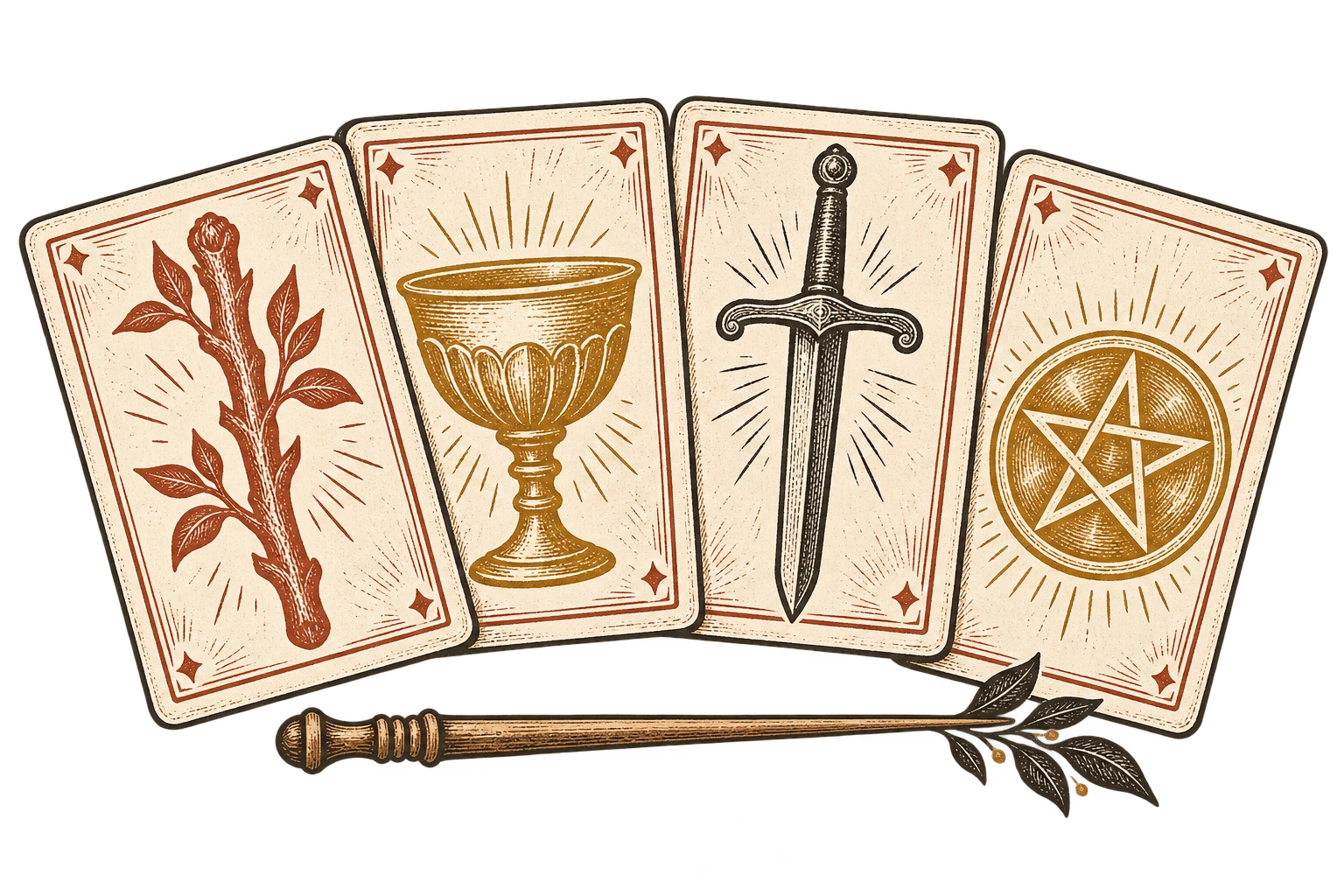
A spread with many cups can bring closeness and needs to the fore, while one with many swords can highlight communication and judgment. Wands point to initiative and direction, and pentacles to resources and daily routine. Counting cards by suit shows only which theme carries the most weight. Once you see that, return to the spread's question and choose one concrete action.
Sources and approach
Starmora wrote the card pairs and questions on this page. The method is to read each card's meaning separately, identify its place in the spread and use the two meanings to form a question about your own experience. The examples show this method in practice.