By Starmora · Updated: 11 October 2026
Getting started with this tool
Draw cards to reflect on your expectations and self-expression when meeting someone. Use the spread as a source of questions about communication, consent and mutual interest.
Calculation and interpretation method
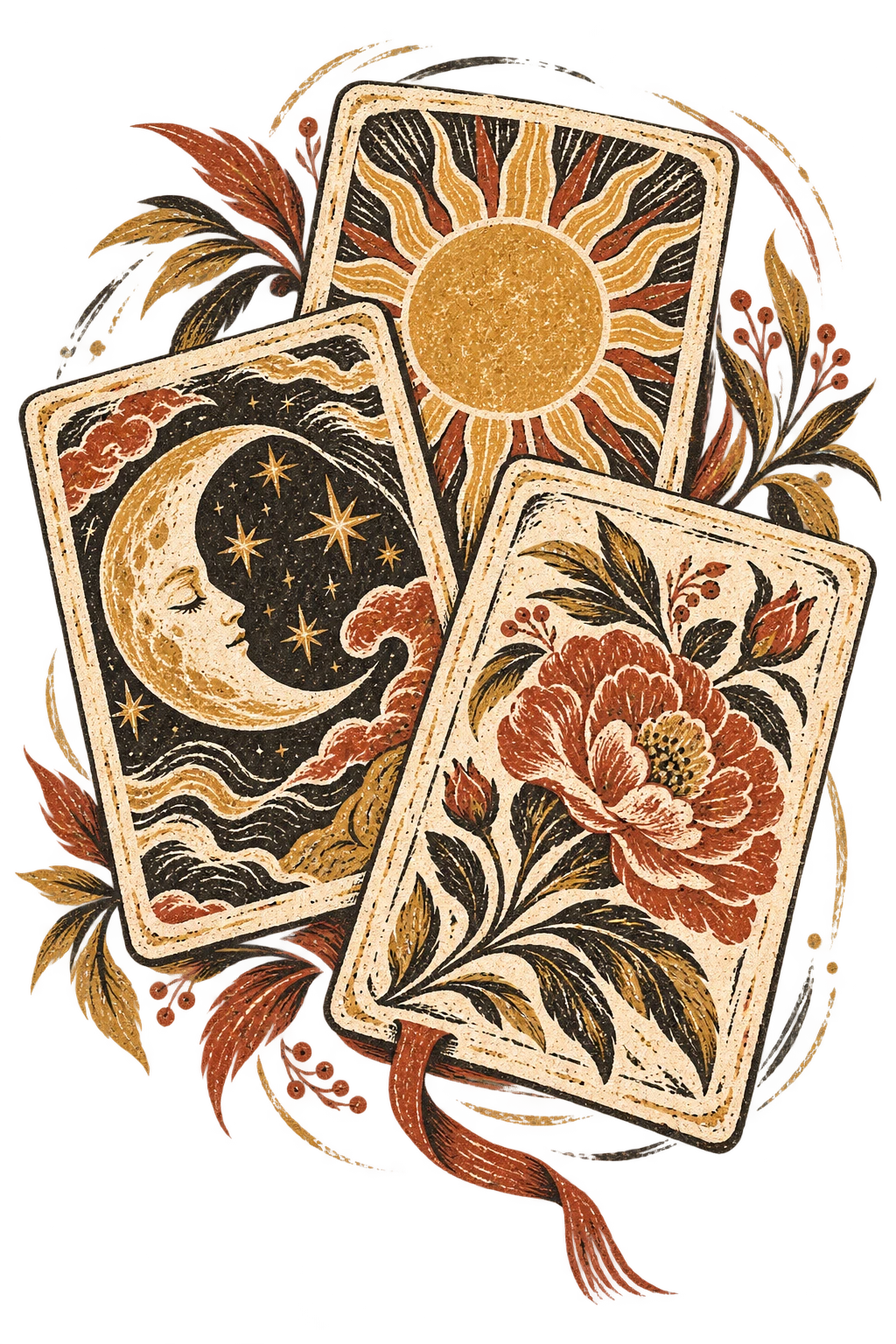
Starmora's original deck has 22 major arcana and 56 minor arcana cards. You choose cards from a shuffled deck, and the same card never appears twice in one spread. If you turn on reversed cards, each card's orientation is random; if the option is off, every card is read upright. Here, tarot is not for telling the future but for looking at your situation from a different angle.
Voice your curiosity with an open question
Draw one card while thinking about how you approach someone new. Instead of using the card's meaning to guess what the other person will do, write down what kind of conversation you'd like. Asking about a shared interest or saying openly what you hope for from a date can be a small first step. Don't force the answer you get to fit the card's description; an answer you didn't expect gives you real information too. Curiosity is at its best when both people's space and boundaries are respected.
This card gets you thinking about your communication style. Attraction and consent, on the other hand, only become clear in a two-way conversation. Asking a question and expecting a particular answer are different things. At the end of the spread, note what you actually learned; that tells you more than looking only for the sign you wanted.
The card, its orientation and its place in the spread
When you read a card, look at three things together: the card's own meaning, its place in the spread and whether it came up upright or reversed. A reversed card often points to the theme turning inward or getting stuck somewhere; don't read it simply as “bad.” The Met Museum source covers the history of tarot and the structure of the deck, while the questions here come from Starmora's own reading method. If you bring your question, the card you drew and your actual situation together in a short note, the symbol becomes more concrete.
Sources and approach
These sources provide background on the traditional concepts or calculations on this page. Starmora’s original examples and reflection questions are not predictions drawn from these sources.