By Starmora · Updated: 11 October 2026
Getting started with this tool
Take a short reflection break with one question and one card. Read the card's upright or reversed meaning, a practical tip and a question that offers a fresh perspective.
Calculation and interpretation method
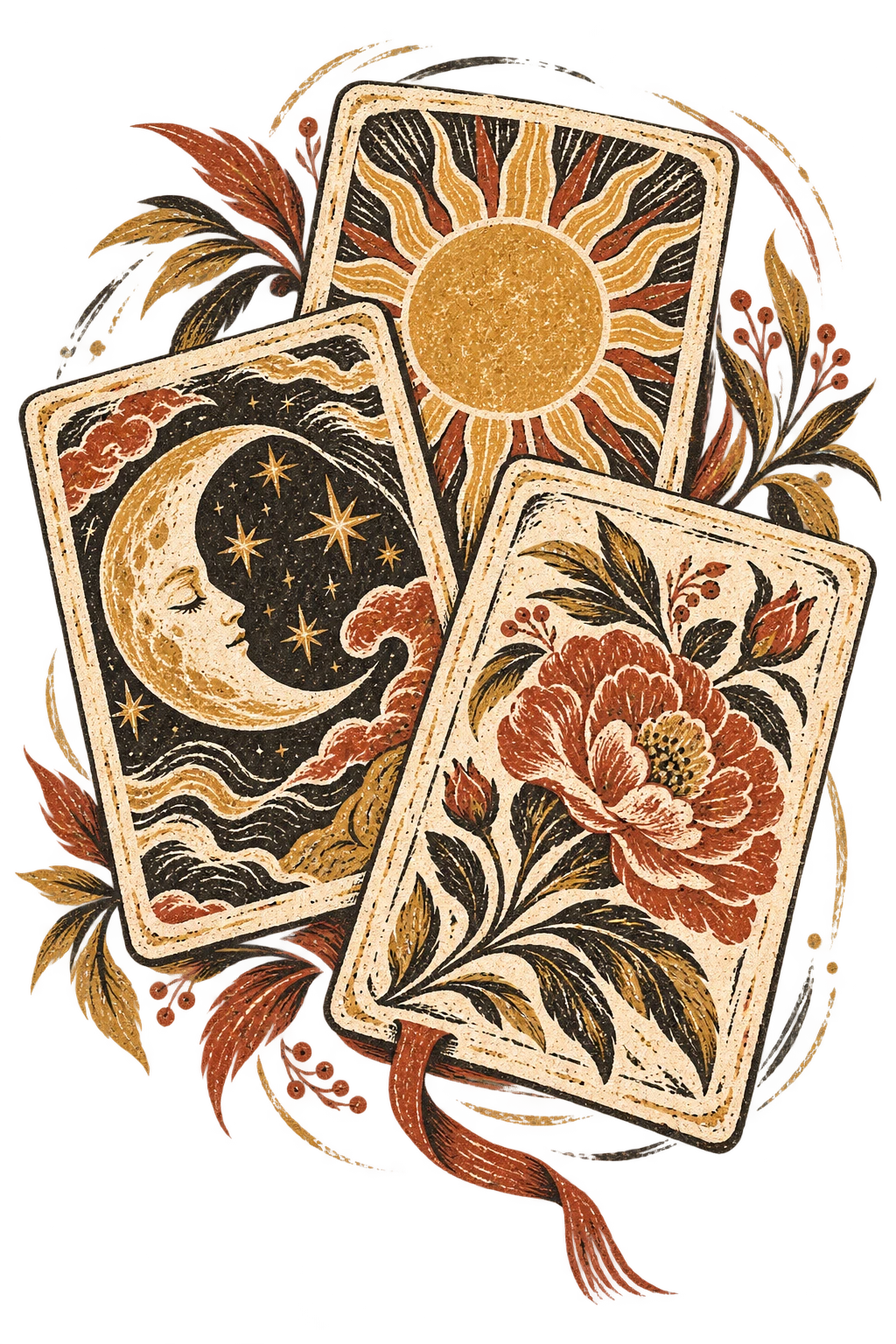
Starmora's original deck has 22 major arcana and 56 minor arcana cards. You choose cards from a shuffled deck, and the same card never appears twice in one spread. If you turn on reversed cards, each card's orientation is random; if the option is off, every card is read upright. Here, tarot is not for telling the future but for looking at your situation from a different angle.
Stay with one question
Draw one card with a short, open question in mind. Before reading the description, write in your own words what the card brings to mind. Then read the description and see where it differs from your first association. With a question about communication, for example, separate what you want to say from what you don't know yet. You don't have to explain a whole experience with one card; clarifying a single question is enough of a goal.
Don't think of the card's upright and reversed meanings as two opposite fates. Adapt the suggested observation to your own situation and choose a step you can finish. If a description doesn't fit you, write down what doesn't fit instead of looking for a new card; that teaches you something too.
The card, its orientation and its place in the spread
When you read a card, look at three things together: the card's own meaning, its place in the spread and whether it came up upright or reversed. A reversed card often points to the theme turning inward or getting stuck somewhere; don't read it simply as “bad.” The Met Museum source covers the history of tarot and the structure of the deck, while the questions here come from Starmora's own reading method. If you bring your question, the card you drew and your actual situation together in a short note, the symbol becomes more concrete.
Sources and approach
These sources provide background on the traditional concepts or calculations on this page. Starmora’s original examples and reflection questions are not predictions drawn from these sources.