By Starmora · Updated: 11 October 2026
Getting started with this tool
Draw a single card while you weigh an option. Explore whether it leans toward yes or no, what it means and the question it asks you, then decide using your own criteria.
Calculation and interpretation method
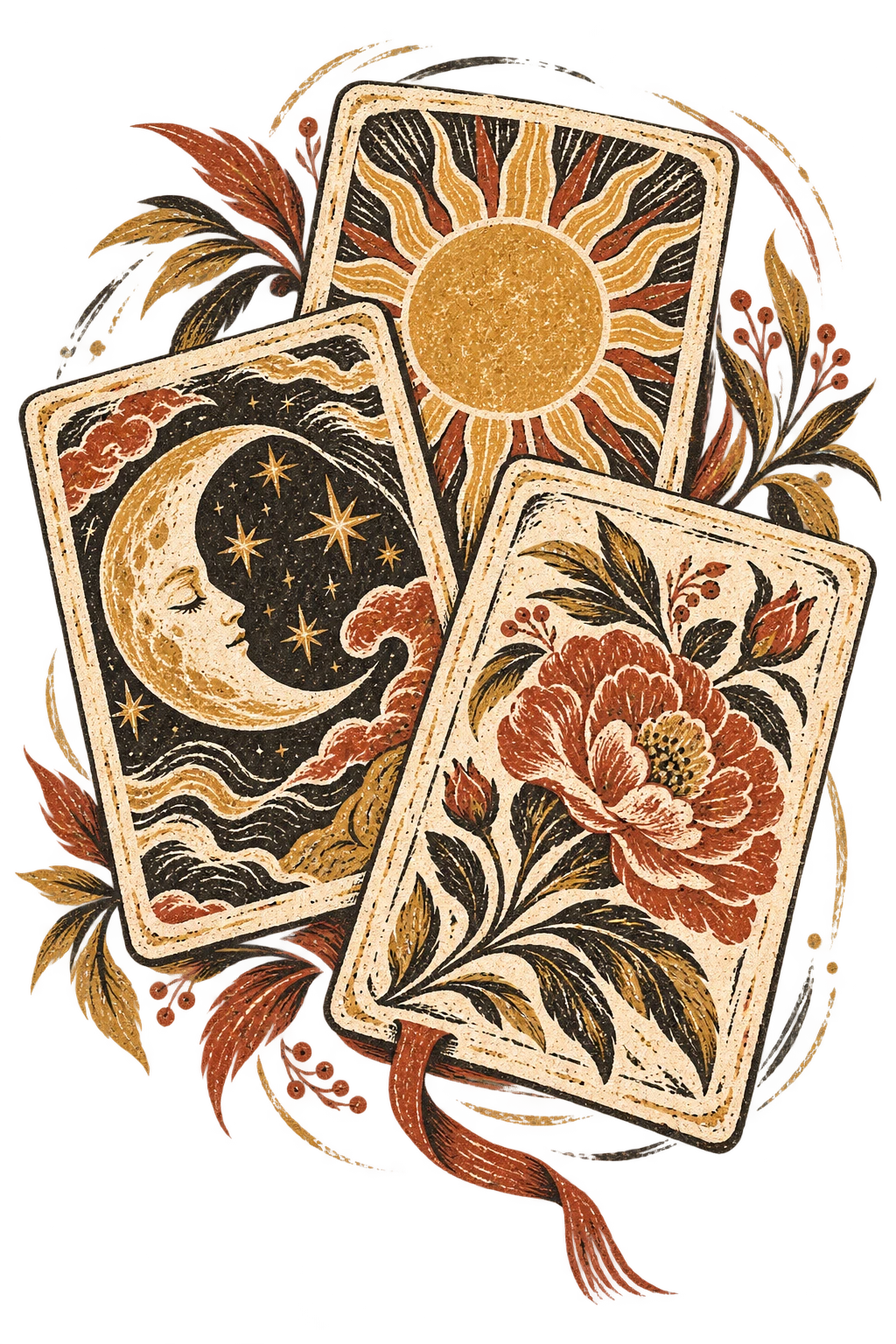
Starmora's original deck has 22 major arcana and 56 minor arcana cards. You choose cards from a shuffled deck, and the same card never appears twice in one spread. If you turn on reversed cards, each card's orientation is random; if the option is off, every card is read upright. Here, tarot is not for telling the future but for looking at your situation from a different angle.
Look at both sides of the choice
Write your question as a clear choice and draw one card. Use the leaning the card shows not as a decision but as a way to think about what information is missing on the “yes” and “no” sides. If you're asking whether to join a plan, for example, write down how much time you'd give it and which of your needs it would meet. After reading the card, set your own decision criterion in one sentence. Then make the decision by applying that criterion to your real circumstances.
Instead of drawing again until you get the answer you want, look at which part of the question you could clarify. A “yes” or “no” label is a leaning, not a percentage chance. If there's information you could get from someone else, asking them directly after the spread is the most concrete step.
The card, its orientation and its place in the spread
When you read a card, look at three things together: the card's own meaning, its place in the spread and whether it came up upright or reversed. A reversed card often points to the theme turning inward or getting stuck somewhere; don't read it simply as “bad.” The Met Museum source covers the history of tarot and the structure of the deck, while the questions here come from Starmora's own reading method. If you bring your question, the card you drew and your actual situation together in a short note, the symbol becomes more concrete.
Sources and approach
These sources provide background on the traditional concepts or calculations on this page. Starmora’s original examples and reflection questions are not predictions drawn from these sources.