
How to use this reading
On this page you'll first find the card's traditional meaning: a summary, in our own words, of the book A. E. Waite wrote for the Rider–Waite–Smith deck. Card meanings vary from one tarot school or deck to another; there is no single correct interpretation. The upright and reversed readings, the everyday example and the card pairing in the sections that follow are Starmora's own suggestions. They don't foretell the future; each one is an invitation to look at your situation with fresh eyes. The card illustrations are our own as well and don't reproduce every detail of the original drawings.
The card's place and keywords
Place in the deck: card 19 of the Major Arcana. Keywords: clarity, joy, visibility. Before you interpret the card, keep in mind the question you asked and the card's position in the spread.
Traditional symbolism: Rider–Waite–Smith
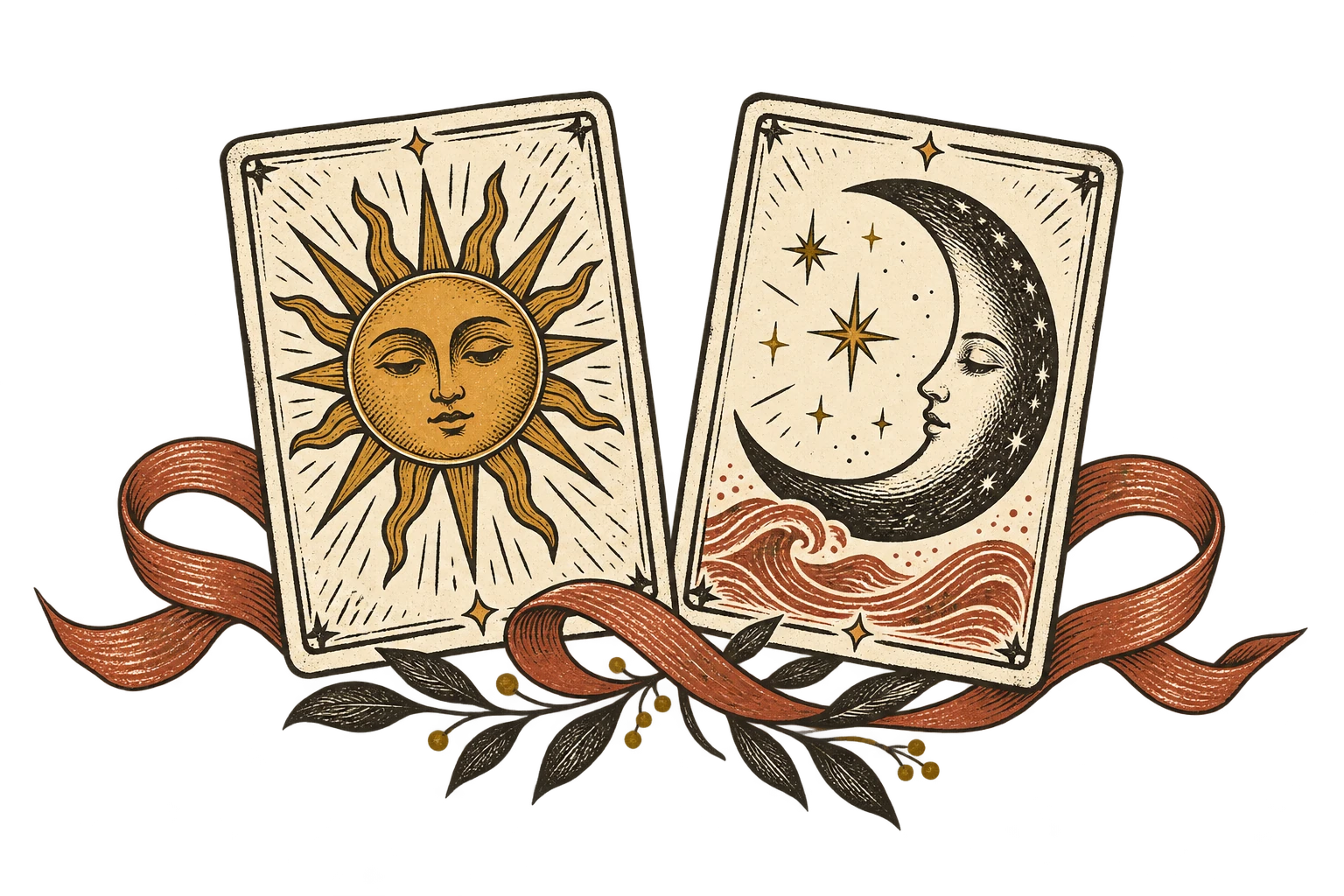
The card shows a child on a white horse, a shining sun and a red banner. The scene speaks of openness, vitality and joy. This joy is not an obligation to be happy every moment but an invitation to notice what is good and share it.
Upright reading
Clarity and shared joy make your work feel lighter. Name what is going well and make the effort behind it visible.
Reversed reading
The pressure to look cheerful all the time can be tiring. You do not have to ignore difficult feelings to appreciate what is good.
An example from everyday life
When you celebrate a finished piece of work, don't stop at sharing the praise; also give credit to the skills and support that made the result possible. You can make room for your tiredness alongside your joy.
Ask yourself
What small success can you celebrate or share with someone?
Card pairing: Six of Wands
The Six of Wands adds visible recognition. Use the Sun's openness to name the contributions missing from your success story. What matters is not winning everyone's approval but making sure the work is seen.
If the order of the cards in the spread or the question you ask changes, this pairing may bring other things to mind. The final word always belongs to your own circumstances and your own judgment.
Sources and approach
These sources provide background on the traditional concepts or calculations on this page. Starmora’s original examples and reflection questions are not predictions drawn from these sources.