In the sky and in your chart
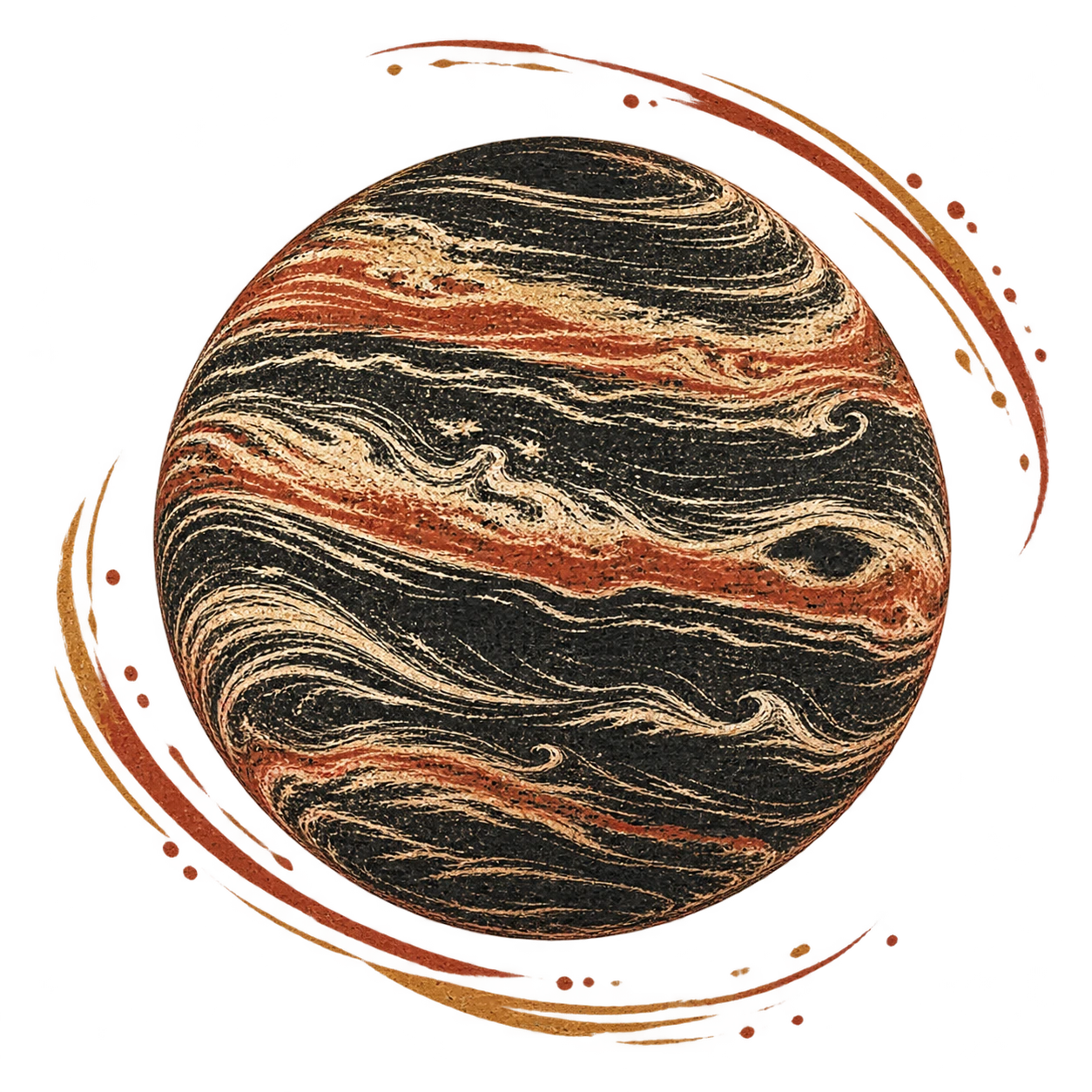
Neptune is the farthest of the major planets from the Sun. It stays in a sign for about fourteen years, so most people of the same generation share a Neptune sign. It is not part of the old seven-planet system; modern astrology considers it the ruler of Pisces. In a personal reading, the main clues come from its house and the aspects it forms with other planets.
What does it describe in your chart?
Neptune describes imagination, ideals, inspiration and empathy. The moments when you lose yourself in art, in music or in a daydream belong to Neptune. So do the times when your boundaries soften and you feel someone else's emotions as if they were your own. Neptune shows its beauty when you can connect your dreams with real life.
Reading the sign, house and aspects together
When you read this planet in your chart, look at three things: its sign, its house and its aspects. The sign describes your way of dreaming. The house shows the area of life where this energy comes to the fore. The aspects describe how this planet connects with the others: which of your wishes support each other and which pull against each other. If your chart lists no aspects for this planet, it works more independently; that doesn't make it any less important.
An example placement
For example, if your Neptune is in the 5th house, your imagination shows itself in creative work and play. If it is in the 7th house, you may tend to idealize the other person in a relationship. If Neptune forms an aspect with Venus, it helps to compare the person you love as they really are with the way you imagine them. Dreaming is lovely, and it becomes even lovelier when you keep your dreams close to reality.
Try it in your own life
Split an expectation into two columns: the behavior you actually see and what you hope will happen. Instead of filling the gap with guesses, turn it into a question you can ask the other person. Do the same in creative work: turn your inspiration into a small piece you can finish.
A short note on the calculations
The examples here were chosen to show how a reading works; the placements in your own chart may be different. A change in birth time or place affects the houses most. Starmora uses the Placidus house system by default; Whole Sign, Equal and Porphyry are also available. When you switch house systems, a planet's sign stays the same; only its house number may change. These interpretations are not predictions but a starting point for getting to know yourself better.
Sources and approach
These sources provide background on the traditional concepts or calculations on this page. Starmora’s original examples and reflection questions are not predictions drawn from these sources.